Dinner
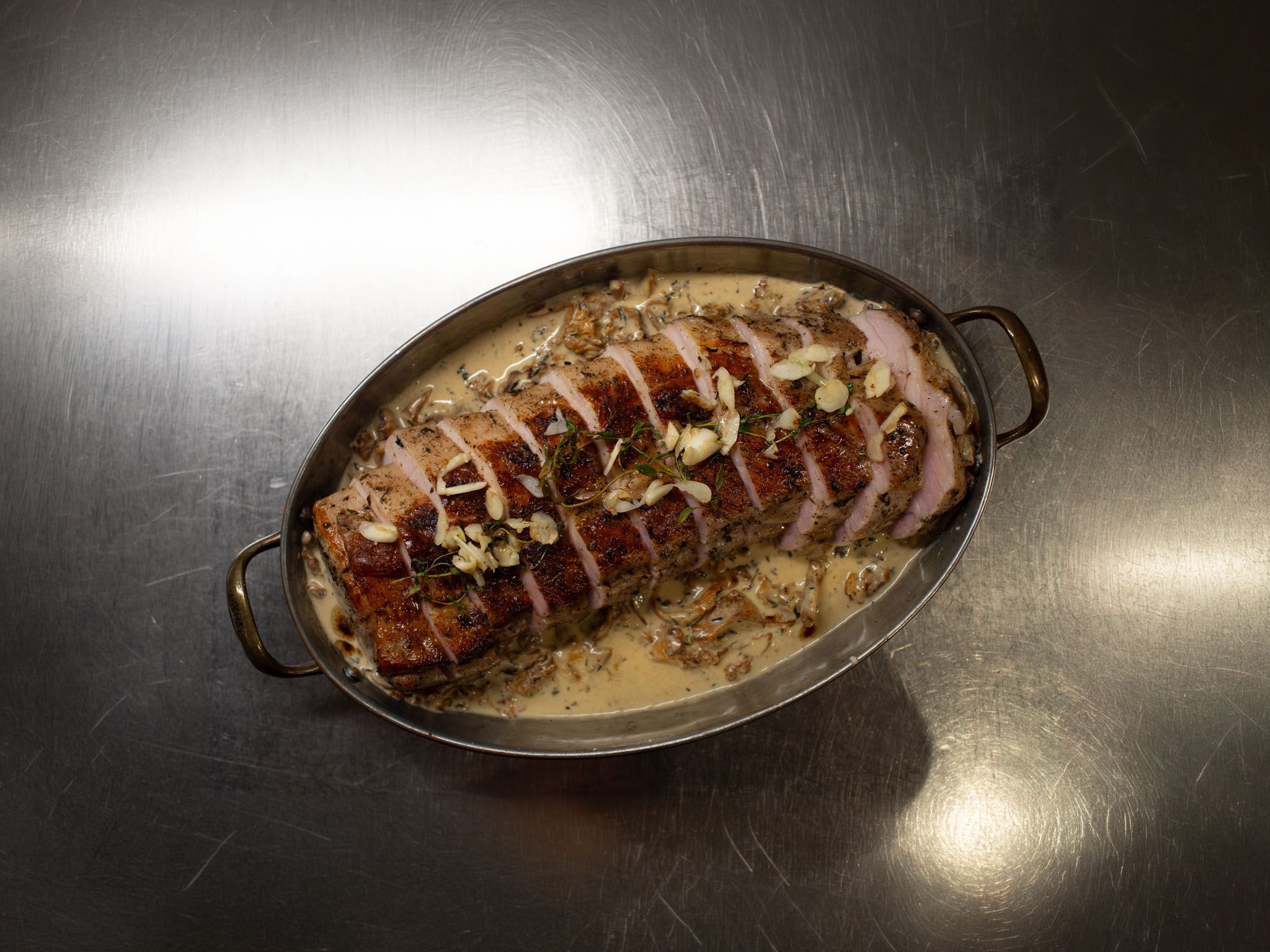
Slow-roasted pork tenderloin with chanterelle cream
Low oven, hot pan, butter at the very end. Pink and juicy all the way through, with a proper crust and a sauce built on the meat's own juices.
- Hands on
- 30 minutes
- Total time
- About 2½ hours (can be split, see method)
- Makes
- ca 6 portions
Ugnsbakad fläskytterfilé is a Swedish classic, and the usual way of making it, hot oven and fingers crossed, gives you a grey ring on the outside and a dry middle. This version flips it around. The pork cooks slowly at 90 °C until it is just done all the way through, and only gets its crust in a hot pan right before you eat. That split is the whole trick: the slow oven takes care of juicy, the pan takes care of flavour, and you can do the oven part days ahead. Everything the meat releases on the way goes into a creamy chanterelle sauce.
Ingredients
Pork
- Pork tenderloin (fläskytterfilé)1 (about 1kg)
- Salt and black pepperTo taste
- Fresh thyme (or 1 tsp dried)4 sprigs
- Olive oil1 tbsp
Chanterelle cream
- Chanterelles, or another mushroom300 g
- Butter25 g
- Cream5 dl
- The juices from roasting and resting the porkAll of it
- Salt and black pepperTo taste
- Milk or water, to loosen if neededA splash
To finish the pork
- Olive oil1 tbsp
- Butter25 g
- Garlic, peeled and lightly crushed2–3 cloves
- Fresh thyme3–4 sprigs
Method
- Heat the oven to 90 °C. Pat the tenderloin really dry with kitchen paper: a dry surface browns, a wet one steams. If there is a thin, shiny membrane (silverskin) along one side, slide a sharp knife under it and trim it off, as it turns chewy.
- Season the pork all over with salt, pepper and thyme, then rub in the olive oil. Put it in a small ovenproof dish.
- Roast for about 1½ hours, until a thermometer in the thickest part reads 60–65 °C. 60 °C gives rosy pink, 65 °C just a blush. The time depends on how thick the tenderloin is, so start checking after an hour. At this low temperature it creeps up slowly, so it is hard to overshoot.
- Wrap the pork tightly in foil and pour the juices from the dish into a cup. Keep them, they are the base of the sauce. Let the meat rest for 30 minutes. If you are eating today, carry straight on. If you are cooking ahead, put the wrapped pork and the juices in the fridge after resting. It keeps for a couple of days.
- If the pork has been in the fridge, take it out about an hour before you eat. A cold tenderloin won't warm through in a few minutes in a pan. For a properly warm centre, give it 15–20 minutes in a 90 °C oven first.
- When you are ready to eat, set a heavy-bottomed frying pan on low to medium heat. This one is for the pork, and the slow start lets it heat evenly while you make the sauce.
- In another pan, fry the mushrooms on medium heat without fat. They will release water first. Let it cook off, and keep going until they get some colour. Add 25 g butter, salt and pepper and fry for 1–2 minutes more.
- Pour in all the saved juices, both from the oven dish and from inside the foil, and let it bubble for 1–2 minutes. Add the cream and simmer until you are happy with the consistency. It thickens as it cools, and you can always loosen it with a splash of milk or water. Taste for salt and keep it warm on low heat.
- Unwrap the pork. Turn the meat pan up to medium-high and add the olive oil. When it shimmers, add the pork and sear for about 2 minutes per side, turning it until it has colour all the way round.
- Lower the heat to medium and add the butter, garlic and thyme. When the butter foams, tilt the pan towards you so it pools, and spoon it over the meat again and again for a couple of minutes, until the butter smells nutty and turns golden brown. Take the pan off before the butter goes dark. (Curious why the butter goes in last and not first? There is an article on it under Read more.)
- Slice the pork into 1.5–2 cm medallions, spoon over a little of the brown butter, and serve with the chanterelle cream. Boiled or mashed potatoes and some lingonberries are never wrong.
One thing that helps. Get a probe thermometer. With the slow oven, the window between perfect and overdone is wide, but only if you know where you are in it. It is the difference between guessing and knowing.