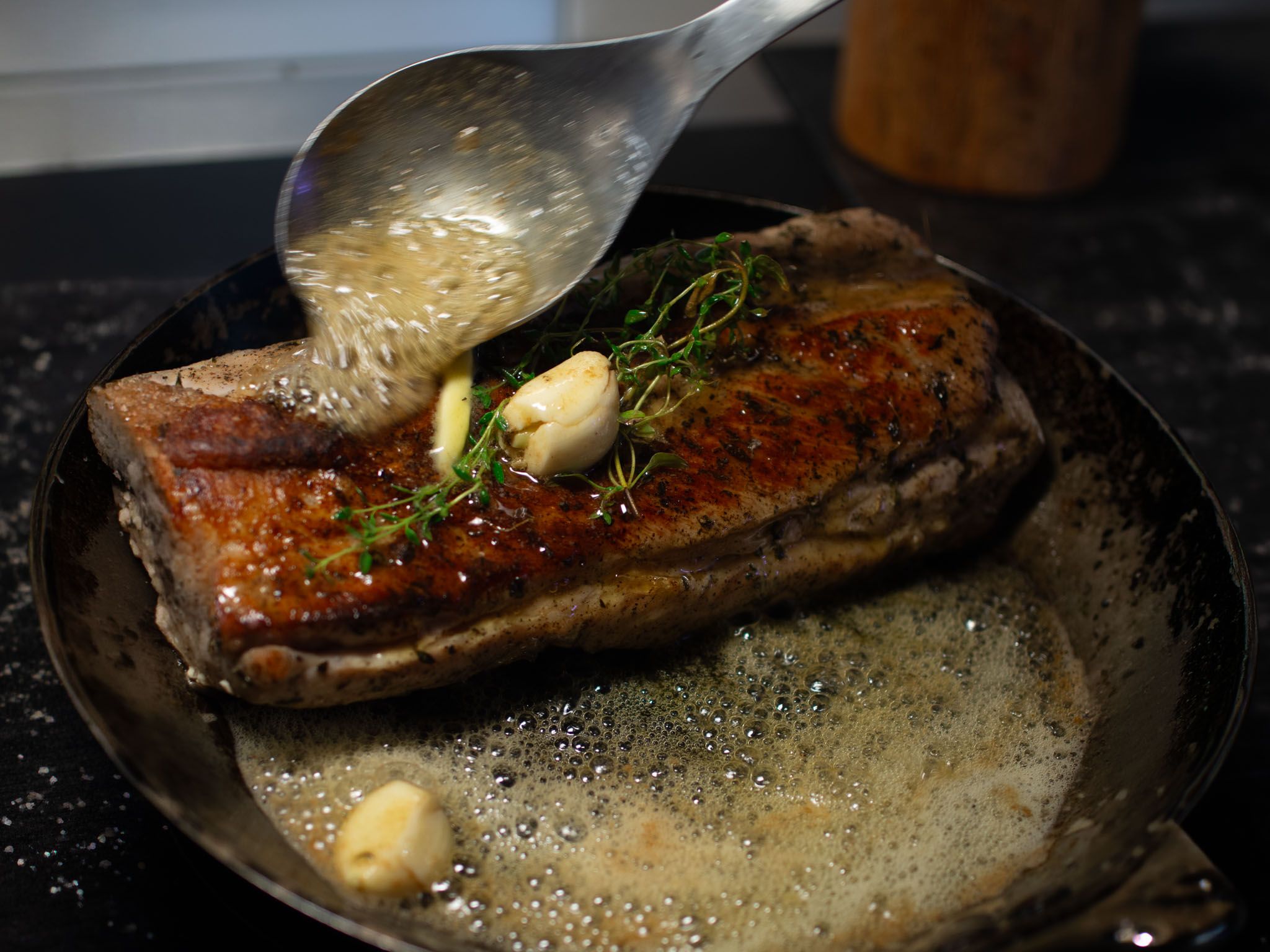
In the slow-roasted pork tenderloin, the last step is a hot pan, a knob of butter, garlic and thyme, and a couple of minutes of spooning foaming butter over the meat. The meat is seared in oil first, and the butter only goes in at the end. That order isn't a fussy chef habit. It comes down to what butter is made of.
Butter is not just fat
Butter is roughly 80% fat, about 15% water and a percent or two of milk solids: proteins and milk sugar. Each part behaves differently in a hot pan, and the milk solids are the ones that matter. They are what browns and gives butter its nutty taste, and they are also what burns. They start to scorch from around 150 °C.
A good sear needs more heat than that. The browning that gives a crust its flavour (the Maillard reaction) only gets going properly when the surface of the meat is well above 140 °C, and a pan hot enough to sear sits closer to 200 °C.
What happens if you start with butter
- The pan is hot enough to sear: the milk solids burn in a minute or two, long before the meat has a crust. Burnt butter is bitter and acrid, and it leaves black specks all over the meat.
- You keep the heat low enough to save the butter: the surface of the meat never gets hot enough to brown. The water in the butter has to boil off first too, so the meat sits there steaming. You end up with a grey, soft outside.
Either way you lose. Oil, like olive or rapeseed oil, is pure fat with no water and no solids, so it can take the heat a sear needs.
What happens when the butter goes in last
By the time the butter goes in, the crust is already built. You turn the heat down a little and add it. The water boils off in a burst of foam, and the milk solids start to toast. For the next minute or two you get butter at its best: golden, nutty brown butter (beurre noisette), and you are done before it can burn.
Spooning it over the meat does three things:
- Flavour. Brown butter tastes of hazelnut and toffee, and basting coats every bit of the crust with it.
- Aromatics. The garlic and thyme go in with the butter. Their flavour dissolves into the fat, and the butter carries it onto the meat. Garlic added at the start would have burnt and turned bitter long before the sear was done.
- Colour on top. The pan only touches one side at a time. Hot butter spooned over keeps browning the sides facing up, including the uneven bits of a round tenderloin that never quite press against the pan.
Oil is for heat. Butter is for flavour. Sear with the first, finish with the second.
What basting does not do
You often hear that searing or basting “seals in the juices”. It doesn't. A crust isn't waterproof, which is why the pan keeps sizzling the whole time. Basting doesn't add moisture to the inside either. Juicy meat comes from not overcooking it, which is the job of the slow oven and the thermometer. The pan step is all about crust and flavour, and that is why it can be short.
Why it fits slow roasting so well
Cooking low and slow first and searing at the end is often called a reverse sear. The meat is already cooked all the way through when it hits the pan, so all the pan has to do is build a crust quickly, before the heat pushes inwards and turns the pink edge grey. The low oven has also dried out the surface, which helps it brown faster. A few minutes in hot oil for the crust, a minute or two of butter for flavour, and you are done.
How to do it
- Sear the meat in a thin layer of oil over medium-high heat until it has colour on all sides.
- Turn the heat down to medium. It buys you time before the butter burns.
- Add the butter, a few crushed garlic cloves and some sprigs of thyme.
- Tilt the pan towards you so the butter pools at the edge, and spoon it over the meat again and again.
- Stop when the butter smells nutty and is golden brown, usually after 1–2 minutes. If it goes dark brown or smells sharp, get the meat out straight away.
If you really want butter from the start
Use clarified butter or ghee. The water and milk solids have been removed, leaving pure butterfat that can handle searing heat (it smokes at around 250 °C). You get a buttery taste through the whole sear, but not the nutty note of brown butter, which is why many cooks still add a little fresh butter at the end.